Google Ads Quality Score and Ad Rank: A Practical Guide for Small Businesses
When a Google Ads campaign feels expensive, many small business owners look at the same two numbers first: cost per click and conversions. Those numbers matter, but they do not explain why one advertiser can pay less for a useful click while another pays more for a weaker position. To understand that difference, you need to know how Google Ads Quality Score and Ad Rank work.
Quality Score is not a magic grade that makes a campaign profitable. It is a diagnostic signal. It helps you see whether your keyword, ad, and landing page make sense together. Ad Rank is broader. It helps Google decide whether your ad can show and where it may appear. The two ideas are related, but they are not the same.
This guide focuses on practical actions. You will learn how to spot weak relevance, improve ad copy, match landing pages to search intent, and decide when a low score is worth fixing. The goal is not to chase a perfect number. The goal is to build a campaign that gives searchers a clear answer and gives your business a realistic path to profit.
What Google Ads Quality Score Actually Means
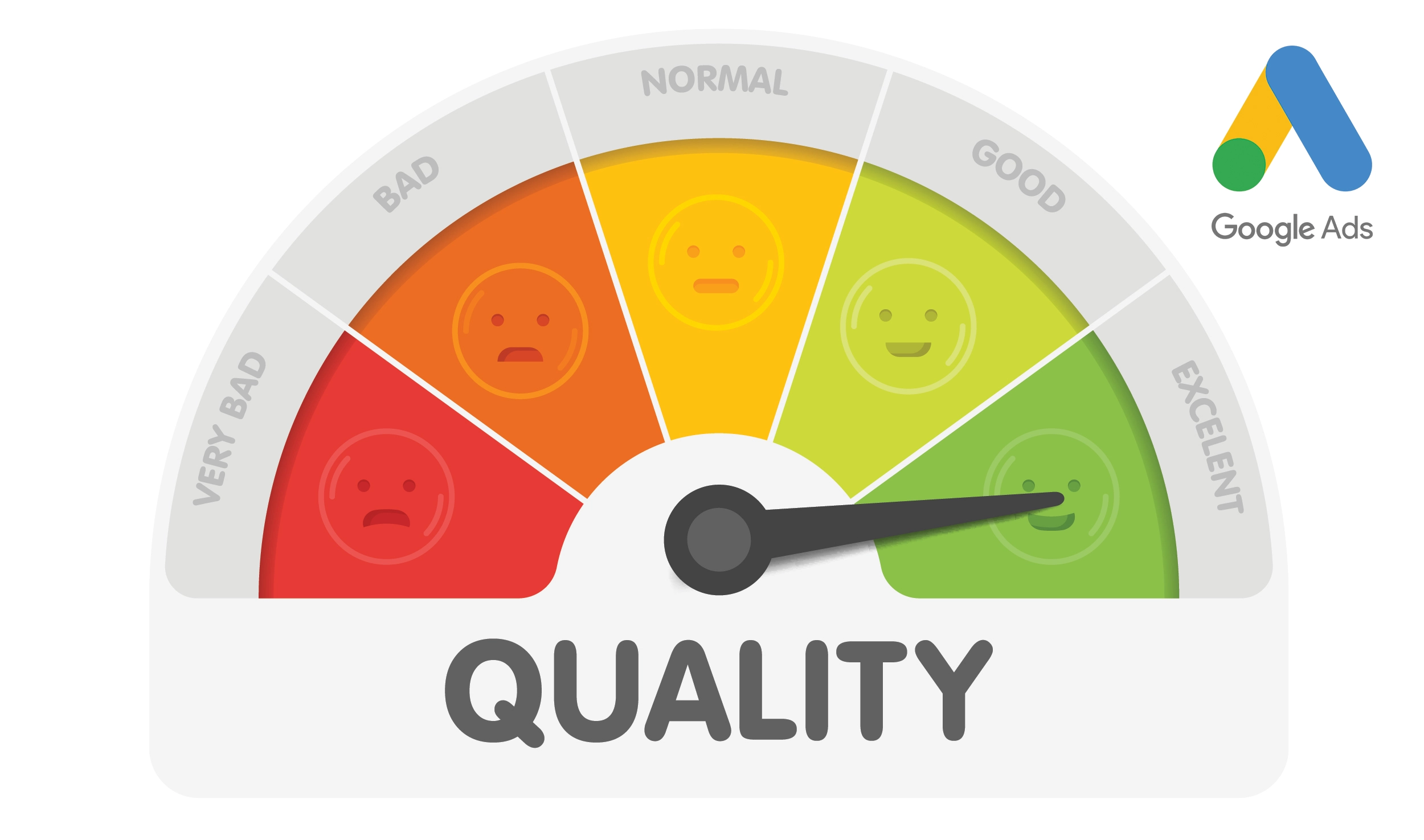
Google describes Quality Score as a diagnostic tool that compares the quality of your ads with other advertisers. You can review it inside Google Ads. The score is reported on a scale from 1 to 10 for eligible search keywords.
Quality Score is based on three main components:
- Expected click-through rate: how likely people are to click your ad when it shows for the keyword.
- Ad relevance: how closely the ad matches what a person appears to be searching for.
- Landing page experience: how useful and relevant the destination page is after the click.
Each component can be reported as above average, average, or below average. That component view is often more useful than the total score because it tells you where to work.
A simple example
Imagine a local accounting firm bidding on the keyword “small business tax accountant.” Its ad says “Affordable Accounting Services” and sends visitors to a generic home page that talks about bookkeeping, payroll, audits, and tax work. The offer is not wrong, but the path is vague.
A stronger version could use an ad that says “Small Business Tax Accountant | Book a Tax Review” and send visitors to a page focused on tax preparation, deadlines, documents, pricing approach, and a clear booking action. The second path better matches the search.
Quality Score Is a Diagnostic, Not a Business KPI
One of the most common mistakes is treating Quality Score as the main success metric. It is not. A keyword with a score of 10 can still lose money. A keyword with a score of 5 can still generate profitable leads.
Your real business metrics are usually closer to these:
- cost per qualified lead
- cost per sale
- conversion rate
- revenue from paid traffic
- return on ad spend
- lead-to-customer rate
Use Quality Score to diagnose friction. Use conversion and revenue data to decide where budget should go.
What Is Ad Rank?
Ad Rank is the system Google uses to decide whether an ad is eligible to show and how it competes in the auction. It considers several signals, including bid, ad and landing page quality, auction competition, search context, and the expected effect of assets such as sitelinks.
This matters because the highest bidder does not automatically win the best position. A more relevant ad and useful landing page can compete strongly even when the advertiser is not willing to pay the highest possible bid.
Why small businesses should care
Large companies may have bigger budgets, but small businesses can still improve auction performance through focus. A local business can create a tightly matched campaign for one service, one city, and one search intent. That focus can be an advantage.
Step 1: Group Keywords by Real Search Intent
Start with keyword structure. Do not put every related phrase into one ad group. Group keywords when the same ad and landing page can answer them well.
For example, a roofing company may separate:
- roof repair
- roof replacement
- emergency roof leak
- commercial roofing
These services are related, but the user needs are different. A person searching for an emergency leak does not want a broad page about every roofing service.
Quick test for ad-group relevance
Read the keywords in one ad group. Ask: “Could one ad headline and one landing page answer all of these searches without sounding generic?” If the answer is no, split the group.
Step 2: Write Ads That Reflect the Search
Strong search ads do not need clever slogans. They need clarity. A user should be able to see that the ad relates to the query within a second or two.
Useful ad copy often includes:
- the main service or product
- a concrete benefit
- a trust signal when relevant
- the location for local campaigns
- a direct next step
For a dentist, “Emergency Dentist in Austin | Same-Day Appointments” is more direct than “Smile With Confidence Today.” The second line may sound polished, but it does less to confirm relevance for an urgent search.
Do not force the keyword into every field
Relevance is not the same as repetition. Avoid stuffing the same phrase into every headline and description. Write for the person first. Use close variations where they improve clarity.
Step 3: Improve Expected Click-Through Rate Without Clickbait
Expected click-through rate is about the likelihood that people will find your ad useful enough to click. You can improve it by making the offer specific.
Consider these two ads:
| Weak | Stronger |
|---|---|
| Professional Plumbing Services | 24/7 Emergency Plumber | Same-Day Help |
| Quality Service at Great Prices | Upfront Pricing | Licensed Local Plumbers |
The stronger version gives users more information before the click. That can improve both relevance and lead quality.
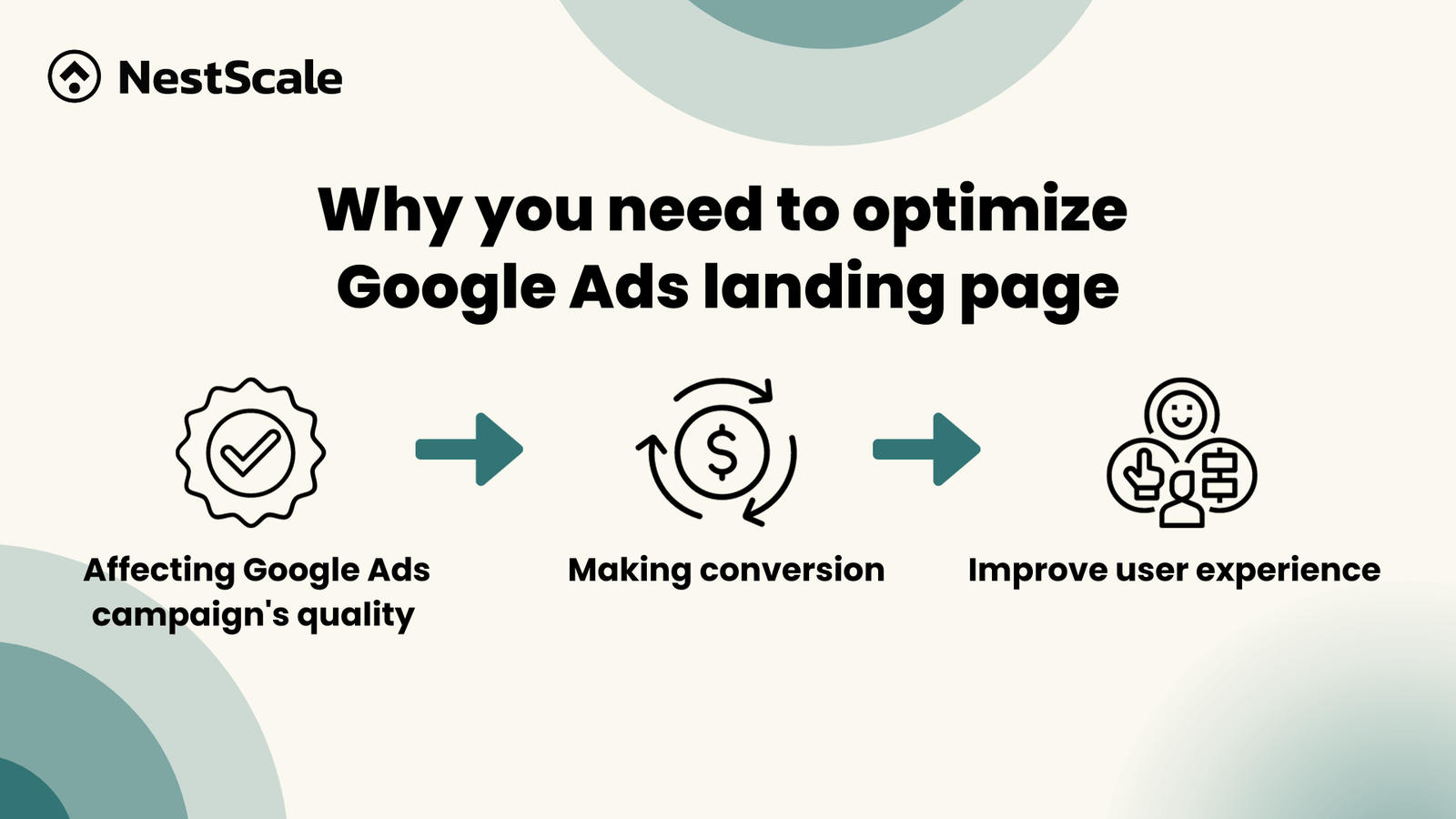
Step 4: Match the Landing Page to the Promise
Landing page experience is often the most neglected part of paid search. Businesses spend hours adjusting bids and keywords while sending every click to the home page.
A useful landing page should answer five questions quickly:
- Am I in the right place?
- Does this business offer what I searched for?
- Why should I trust it?
- What will happen if I take the next step?
- How do I act now?
Practical landing page checklist
- Use a headline that matches the ad topic.
- Explain the service in plain English.
- Show real proof such as reviews, certifications, or case results when available.
- Keep the main call to action visible.
- Make forms short enough for the intent.
- Check mobile speed.
- Remove broken links and layout problems.
- Use HTTPS.
- Make pricing or qualification terms clear when possible.
You can use PageSpeed Insights to inspect performance issues. Do not optimize a page only for a score. Focus on actual loading, layout stability, and usability.
Step 5: Use Ad Assets to Give More Context
Assets can make a search ad more useful. Depending on campaign type and eligibility, you may add sitelinks, callouts, structured snippets, call assets, location assets, price assets, and other formats.
A home services company could use sitelinks for “Emergency Repair,” “Service Areas,” “Pricing,” and “Customer Reviews.” These links help users reach a more specific destination.
Step 6: Review Search Terms, Not Just Keywords
Your keyword is what you target. The search term is what the user actually typed. That difference is important.
Review the search terms report on a regular schedule. Look for:
- irrelevant searches
- new useful phrases
- different user intent
- locations you do not serve
- research queries when you need buying intent
Add negative keywords when a pattern is clearly irrelevant. Do not add negatives so aggressively that you block useful variations.
Step 7: Check Quality Score Components Before Rebuilding a Campaign
Do not react to a low score without knowing which component is weak.
| Weak component | Likely first action |
|---|---|
| Expected CTR | Improve offer clarity, headline relevance, and assets |
| Ad relevance | Tighten ad groups and align ad copy to keyword intent |
| Landing page experience | Improve page match, usefulness, speed, and mobile usability |
This makes optimization more focused. You avoid changing everything at once.
When a Low Quality Score May Not Be Your Biggest Problem
Some keywords are naturally difficult. Brand-new campaigns have limited history. Low-volume phrases may provide weak diagnostic data. Competitive industries can still produce high costs even with good relevance.
If a keyword generates qualified leads at an acceptable cost, do not damage performance just to raise the score. Improvement is useful when it also improves the user journey or economics.
How to Diagnose a High-Cost Keyword Step by Step
1. Check the search term
Make sure the traffic is relevant. If the query is wrong, no landing page change will fix it.
2. Check device and location
See whether poor performance comes from a device type or region that does not fit the business.
3. Check ad relevance
Read the ad as if you were the searcher. Does it answer the query directly?
4. Check the landing page
Compare the promise in the ad with the page headline, proof, offer, and form.
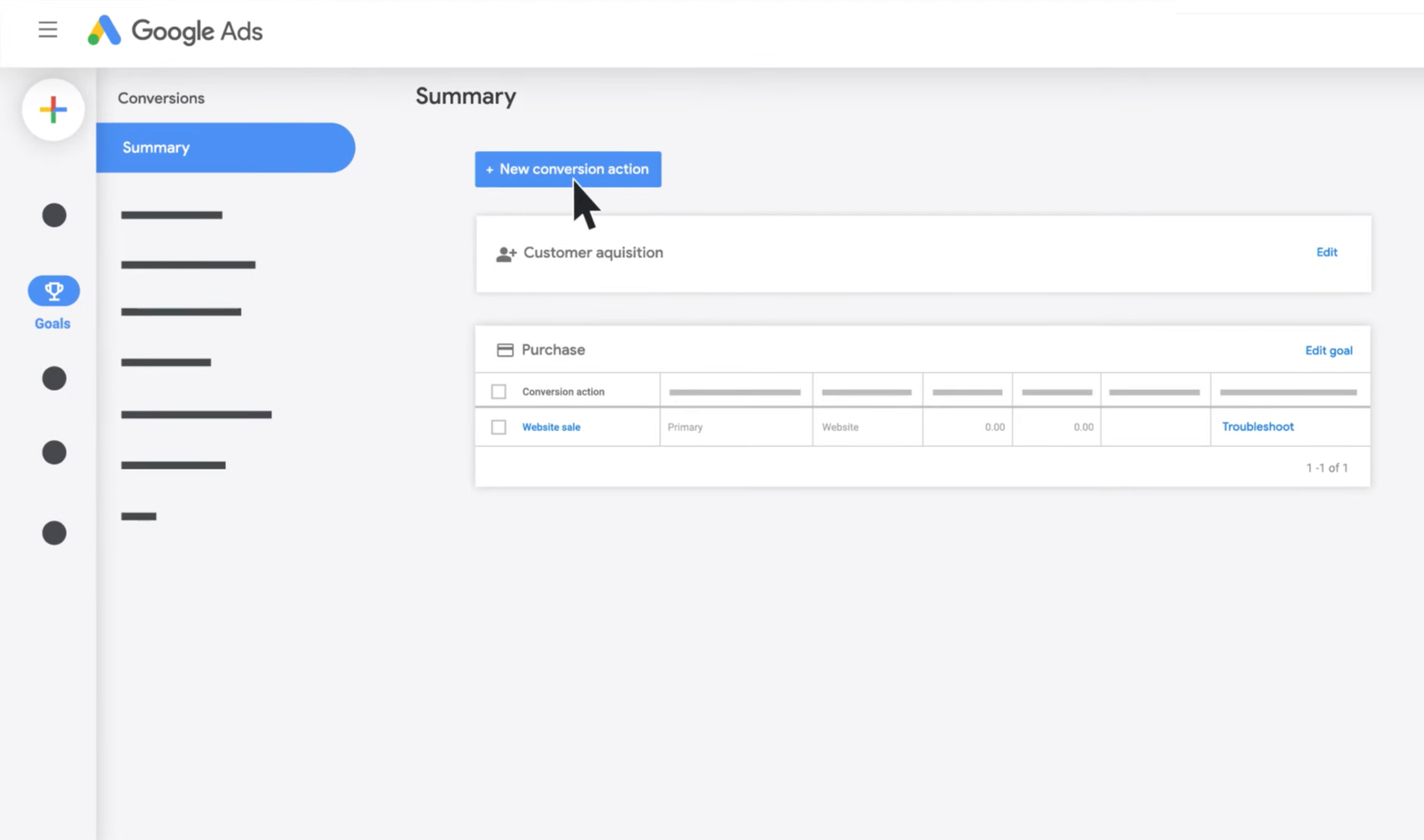
5. Check conversion tracking
Make sure the campaign is measuring the action that matters. A broken conversion setup can make good traffic look bad.
6. Check economics
Calculate the maximum cost per lead or sale your business can afford. Optimization needs a financial target.
Real-World Scenario: Local Legal Service
Suppose a small legal office runs ads for “business contract lawyer.” The keyword gets clicks but few inquiries. The ad is relevant, yet the landing page is a broad “Our Legal Services” page.
The firm creates a dedicated page that explains contract review, drafting, common business cases, expected process, consultation steps, and attorney credentials. The form asks only for name, email, phone, and a short description.
The improvement is not a trick for Quality Score. It is a better user path. Even if the score changes only slightly, the clearer page may improve conversion rate and lead quality.
Common Quality Score Mistakes
- Chasing 10/10 on every keyword: profitability matters more.
- Sending all traffic to the home page: specific searches often need specific pages.
- Overusing exact keyword repetition: write natural, useful ads.
- Ignoring search terms: irrelevant traffic damages campaign efficiency.
- Changing bids before fixing relevance: paying more does not solve a weak message.
- Judging too early: allow enough data before making major decisions.
- Optimizing only desktop: many searches happen on mobile.
A Weekly Quality Review Routine
Small businesses do not need to spend all day inside Google Ads. A focused weekly review can be enough for a modest account.
- Review conversions and cost per conversion.
- Check search terms for wasted spend.
- Review high-spend keywords with poor outcomes.
- Check Quality Score components where available.
- Inspect ads with weak relevance or click response.
- Review landing pages on mobile.
- Make one or two meaningful changes.
- Record what changed so you can compare later.
FAQs About Google Ads Quality Score
Does a higher Quality Score always lower cost per click?
No. Auction cost depends on several factors. Better relevance can help competitiveness, but there is no simple rule that guarantees a specific CPC reduction.
Should I pause every keyword with a score below 5?
No. Look at conversions, search intent, and the three Quality Score components. A profitable keyword may still be worth keeping.
Can changing the landing page improve Quality Score?
It can improve landing page experience when the new page is more relevant, useful, transparent, and easy to use.
Does bid affect Quality Score?
Quality Score is a diagnostic measure and is separate from the bid. Bid does affect auction competitiveness through Ad Rank.
How often should I review Quality Score?
Review it when diagnosing important search keywords, especially after enough traffic has accumulated. Do not make daily decisions based only on small score changes.
Conclusion
Google Ads Quality Score is most useful when you treat it as a clue, not a target. If expected click-through rate is weak, make the offer clearer. If ad relevance is weak, tighten keyword groups and match the language to real search intent. If landing page experience is weak, build a page that answers the user’s question quickly and honestly.
Then judge the campaign by business outcomes. Track qualified leads, sales, cost per acquisition, and revenue. A well-structured campaign connects the search, the ad, and the landing page in one clear path. That is the practical goal behind Quality Score optimization.