Meta Ads testing becomes confusing when too many things change at once. A business launches several audiences, many ads, different offers, and new landing pages in one campaign. Results move up and down, but no one knows why.
A useful testing strategy is much simpler. Decide what question you want to answer. Keep the other major parts as stable as possible. Give the test enough budget and time to collect useful data. Then judge the result using the business outcome, not only cheap clicks.
This guide explains a practical Meta Ads testing strategy for small businesses and lean marketing teams. It covers creative tests, audience tests, offer tests, budgets, lead quality, and a simple testing calendar. For current product controls and campaign features, use Meta Ads Manager and Meta Business Help Center as the primary references.
Start with a clear test question
Every test should answer one useful question.
Good questions include:
- Which creative angle gets more qualified leads?
- Does a customer testimonial beat a product demo?
- Does a broad audience perform better than a narrow interest group?
- Does a shorter form improve lead volume without hurting lead quality?
- Does a free consultation outperform a downloadable guide for this audience?
“Let us test everything” is not a clear question. It produces data without a clean decision.
Define the business conversion first
A Meta campaign can generate views, clicks, messages, forms, purchases, and many other actions. Choose the event that matches the business goal.
For an ecommerce brand, it may be a purchase. For a local service business, it may be a qualified lead or booked appointment. For a software company, it may be a trial signup that later becomes an active user.
The test should be judged as close to revenue as your tracking allows.
Do not confuse a cheap lead with a good lead
Lead quality matters. A campaign can show a low cost per lead and still produce poor business results.
| Ad set | Cost per form | Qualified lead rate | Cost per qualified lead |
|---|---|---|---|
| A | $12 | 20% | $60 |
| B | $20 | 60% | About $33 |
Ad set B looks more expensive inside the platform, but it produces qualified leads at a lower real cost. Connect marketing data with sales outcomes whenever possible.
Build a test hierarchy
Not every variable deserves equal attention. A practical order is:
- Offer
- Creative angle
- Creative execution
- Audience
- Landing page or lead form
- Budget and scaling method
If the offer is weak, testing button colors will not fix the campaign. If the creative does not explain the value, a new audience may not solve the core problem.
Test the offer before small design details
The offer is what the user gets and why they should act now. It includes price, package, incentive, consultation, demo, lead magnet, or other value exchange.
Example: local fitness studio
The studio could test:
- Free first class
- Seven-day beginner pass
- Free movement assessment
These are meaningful differences. Testing a blue button versus a green button is much less important when the core offer is not proven.
Test creative angles before making many visual variants

A creative angle is the main reason the ad gives someone to care.
For a bookkeeping service, angles might include:
- Save time on monthly books
- Get cleaner numbers before tax time
- Know cash flow sooner
- Fix messy books after rapid growth
- Reduce the founder’s admin load
Test two or three distinct angles. Once a strong angle appears, test different ways to present it.
Use different creative formats for different proof
Different formats can communicate different types of value.
Short video
Useful for demonstrations, founder explanations, customer stories, and before-and-after processes.
Static image
Useful when one clear message and visual can explain the offer quickly.
Carousel
Useful for steps, features, product sets, comparisons, or a short story.
User-style demonstration
Useful when a real person can show the product or experience in a natural setting. Keep claims accurate and get permission when customers or creators appear.
A simple creative test structure
Suppose an online course sells a beginner spreadsheet class. The team wants to test creative angles.
Keep these stable:
- Audience
- Offer
- Landing page
- Campaign objective
Test three ads:
- Problem angle: “Stop spending hours fixing the same spreadsheet errors.”
- Outcome angle: “Build a clean monthly tracker in one afternoon.”
- Confidence angle: “Learn the spreadsheet basics you need for daily work.”
If one angle clearly leads to more qualified sales at a sustainable cost, the next test can focus on video versus static versions of that angle.
Change one major variable when you need a clean answer
Perfect laboratory testing is not always possible in live advertising. Still, avoid changing every major input at the same time.
If you change the audience, offer, creative, and landing page together, a better result does not tell you what caused the improvement.
Keep a test log with:
- Test name
- Start date
- Question
- Variable changed
- What stayed stable
- Budget
- Primary metric
- Result
- Decision
Know when audience testing is useful
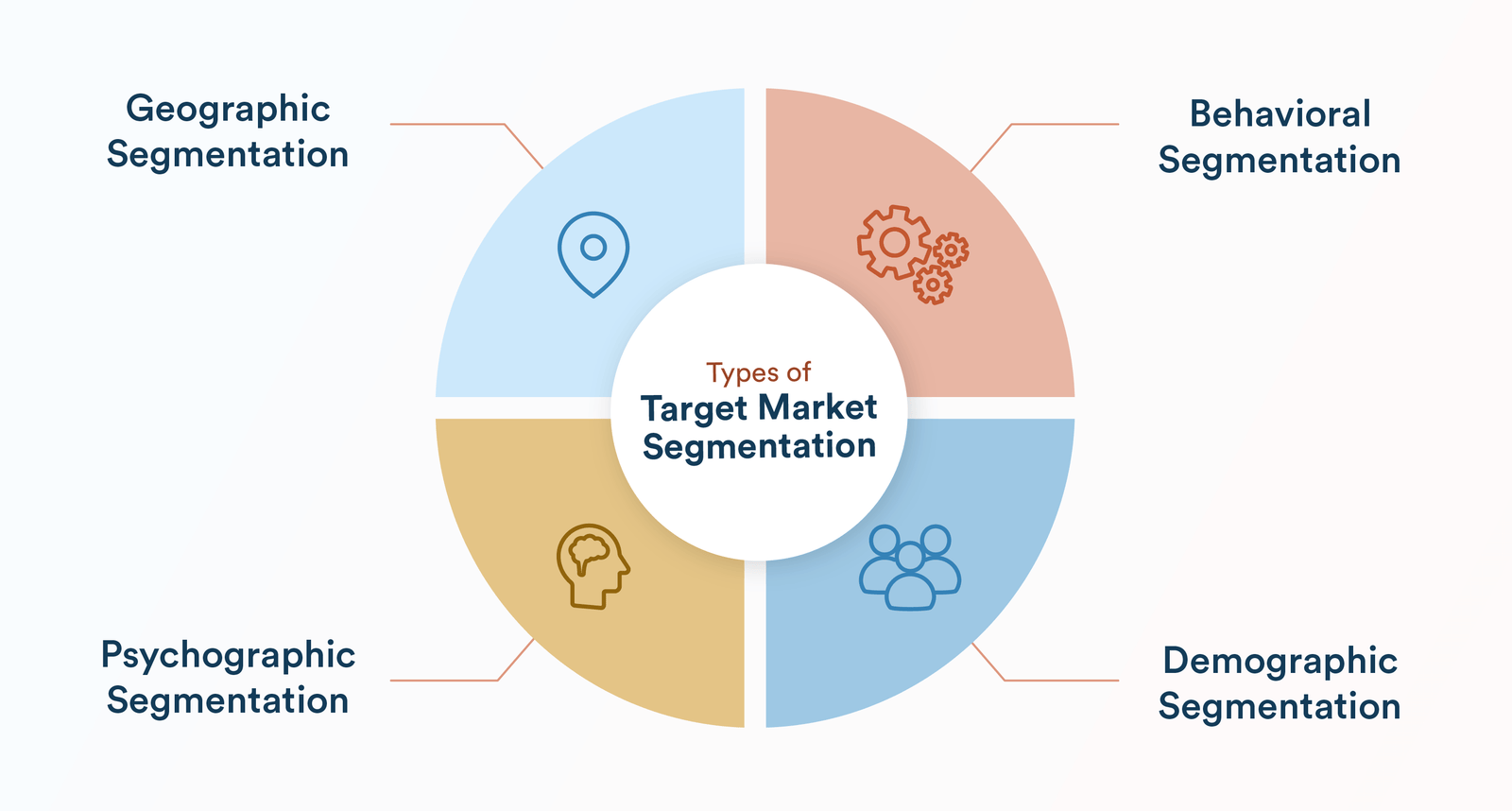
Audience testing matters when the business can clearly define different groups or when the platform has enough conversion data to compare broader delivery with more specific targeting.
Possible audience tests
- Broad location and age range versus selected interests
- New prospects versus website visitors
- Customer lookalike-style audiences where available versus broad targeting
- Different geographic markets
- Different customer segments with different messages
Do not make tiny audience splits that create many groups with too little budget to learn anything.
Use different messages for different customer segments
An audience test is stronger when the message fits the segment.
A project management tool may serve both agencies and construction teams. Those groups can care about different problems. Agencies may care about client approvals and workload. Construction teams may care about site updates and task ownership.
Testing the exact same generic ad against both audiences can hide useful differences.
Retargeting needs a different message
Someone who already visited your pricing page is different from someone who has never heard of the business.
A new prospect may need education and proof. A returning visitor may need a case study, FAQ, product comparison, or reminder.
Keep retargeting audiences large enough to be useful and follow current privacy and platform rules.
Set the budget around the conversion cost you can accept
Before the test starts, define a target or maximum sustainable cost per acquisition.
Suppose a business can afford $50 per qualified lead. If it wants at least 12 qualified leads across a first test, a rough allowance is:
12 × $50 = $600
This does not guarantee 12 leads. It simply ties the test budget to a measurable business target.
If $600 is more than the business can safely test, reduce the scope. Test one product, one location, or one audience instead of spreading a small budget across many campaigns.
Avoid underfunding too many ad sets
Imagine a business has $30 per day and creates six separate ad sets. Each part receives very little spend. The team then compares results after two days and declares a winner.
That decision may be based on noise.
A better plan may use fewer ad sets and clearer creative differences. Concentrated tests are easier to learn from.
Do not judge a new test after a handful of clicks
Early results can change. One purchase or one expensive lead can move the average sharply when the sample is small.
Give the test enough time and conversion volume to support a decision, unless there is a clear problem such as broken tracking, a rejected ad, an incorrect location, or obviously irrelevant traffic.
The exact amount of data depends on the business and conversion frequency.
Use guardrail metrics
Your primary metric may be cost per purchase or qualified lead. Guardrail metrics help explain why performance changed.
Useful guardrails can include:
- Click-through rate
- Landing page views
- Cost per landing page view
- Form completion rate
- Video hold or watch behavior
- Checkout initiation
- Qualified lead rate
Do not optimize a guardrail metric at the expense of the business result. A high click-through rate is not useful if the clicks never convert.
Test the landing page when ads get interest but conversions stay weak
If people click but do not convert, the problem may be after the ad.
Landing page checks
- Does the headline match the ad?
- Is the offer clear on mobile?
- Does the page load quickly?
- Is the form longer than needed?
- Is important proof visible?
- Are price or next-step expectations clear?
- Does the page work without layout errors?
Test one meaningful page change at a time when possible.
Lead form tests should protect quality
Short forms often get more submissions, but more is not always better.
If sales teams receive many poor leads, test one qualifying question. For example, a commercial service may ask company size, project timeline, or service area.
The goal is not to make the form difficult. It is to collect enough information to understand fit.
Use creative fatigue as a signal, not a panic button
An ad can weaken over time as the same audience sees it repeatedly. Watch for a pattern such as rising acquisition cost, falling response, and high repetition.
Do not replace every ad just because frequency rises. Check the business result. A proven ad may keep working longer than expected.
Create a creative refresh system
Keep the winning angle and change one execution element:
- New opening line
- New first three seconds
- New customer example
- New visual demonstration
- New proof point
- New format
This preserves what worked while giving the audience something fresh.
A four-week Meta Ads testing calendar
Week 1: verify the offer and tracking
Run a small number of clear creatives. Check whether conversion events work and leads reach the sales process.
Week 2: test creative angles
Keep the core offer stable. Compare two or three distinct messages. Judge by qualified business results.
Week 3: test the strongest creative in another format
If an angle works, test a static image against a short video or carousel while keeping the message close.
Week 4: test audience or landing page improvement
Choose one based on the evidence. If clicks are weak, audience-message fit may need work. If clicks are strong but conversions are weak, test the page or form.
When to scale a winning test
Scale when:
- Tracking is accurate.
- The conversion is valuable.
- Lead or customer quality is acceptable.
- The acquisition cost fits the business model.
- The team can handle more volume.
- The result is not based on one lucky conversion.
Increase spend in measured steps and watch whether cost and quality remain stable.
When to stop a test
Stop or fix a test when there is a clear structural problem:
- Wrong country or location
- Broken conversion tracking
- Broken landing page
- Rejected or limited ad that cannot deliver as planned
- Offer information is wrong
- Leads are clearly outside the service area
- The business cannot respond to leads
Do not wait for more data from a test you already know is invalid.
Keep privacy and platform policy in the process
Ad targeting, customer data, tracking, and claims must follow current laws and Meta policies. Use the Meta Advertising Standards when reviewing ad content and restricted categories.
Do not make misleading claims, fake testimonials, or promises you cannot support. Be careful with sensitive personal attributes in ad copy and targeting.
Use a simple test scorecard
| Question | Pass? |
|---|---|
| Did the test change one main variable? | Yes/No |
| Was tracking verified? | Yes/No |
| Did it get enough data for a useful decision? | Yes/No |
| Was lead/customer quality acceptable? | Yes/No |
| Did CPA fit the business target? | Yes/No |
| Can the result guide the next test? | Yes/No |
A test that loses money can still teach something useful. A test that changes six things and produces no clear lesson wastes more value.
Meta Ads testing checklist
- Define one business conversion.
- Set a sustainable acquisition target.
- Write one clear test question.
- Test the offer before tiny design changes.
- Test distinct creative angles.
- Keep other major variables stable when you need a clean answer.
- Use fewer, meaningful audience groups.
- Track qualified leads and sales.
- Review landing page performance.
- Keep a change log.
- Give tests enough data.
- Refresh winning ideas before replacing them.
- Scale only when business quality holds.
Frequently asked questions
How many ads should I test at once?
There is no fixed number. A small budget should usually test fewer, more distinct ads. If you run too many variants, each one may receive too little spend to learn from.
Should I test audience or creative first?
For many campaigns, the offer and creative message deserve early attention. If the message is weak, changing audiences may not solve the problem. Use your current data to decide which variable is the likely constraint.
How long should a Meta Ads test run?
Use enough time and conversion volume to make a useful decision. Do not stop based on a few clicks. Fix clear tracking or targeting errors immediately.
What is the best metric for creative testing?
Use the business conversion as the main metric when enough data exists. Click and video metrics can help explain performance, but they should not replace cost per qualified lead, purchase, or another meaningful outcome.
Should I duplicate a winning ad and change the hook?
That can be a useful next test. Keep the proven angle, change one execution element, and compare results with a clear goal.
Conclusion: every test should lead to a decision
Meta Ads testing works best when the team asks one clear question at a time. Start with the offer and business conversion. Test meaningful creative angles. Use audience and landing page tests when the data points to those areas. Track lead quality, not only low-cost forms.
Keep a test log and use each result to choose the next action. Scale what produces sustainable business outcomes. Fix structural problems quickly. When a test does not win, keep the lesson. A simple learning system is more valuable than a campaign filled with random changes.